


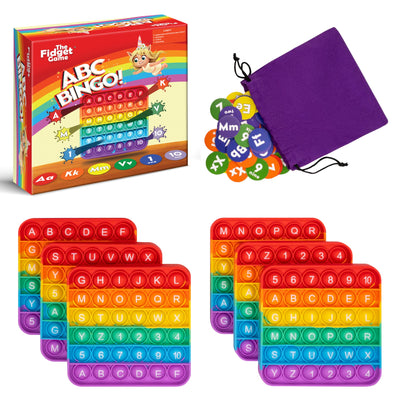
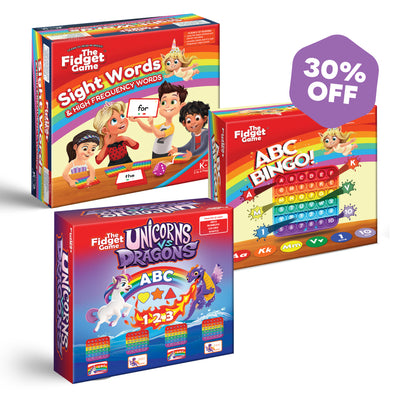
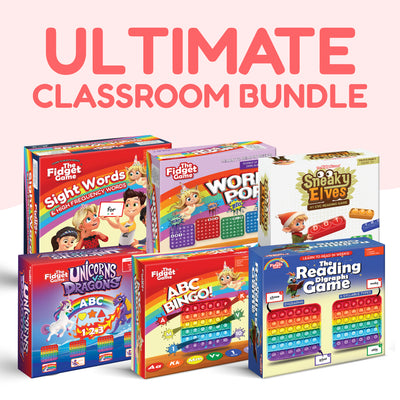
6 ABC Double-Sided Fidget Mats (Uppercase and Lowercase Letters)
Educator Createdorders over £40.00
30-day returnshassle-free
Secure paymentsSSL encrypted
Ships in 3 daysfrom the UK
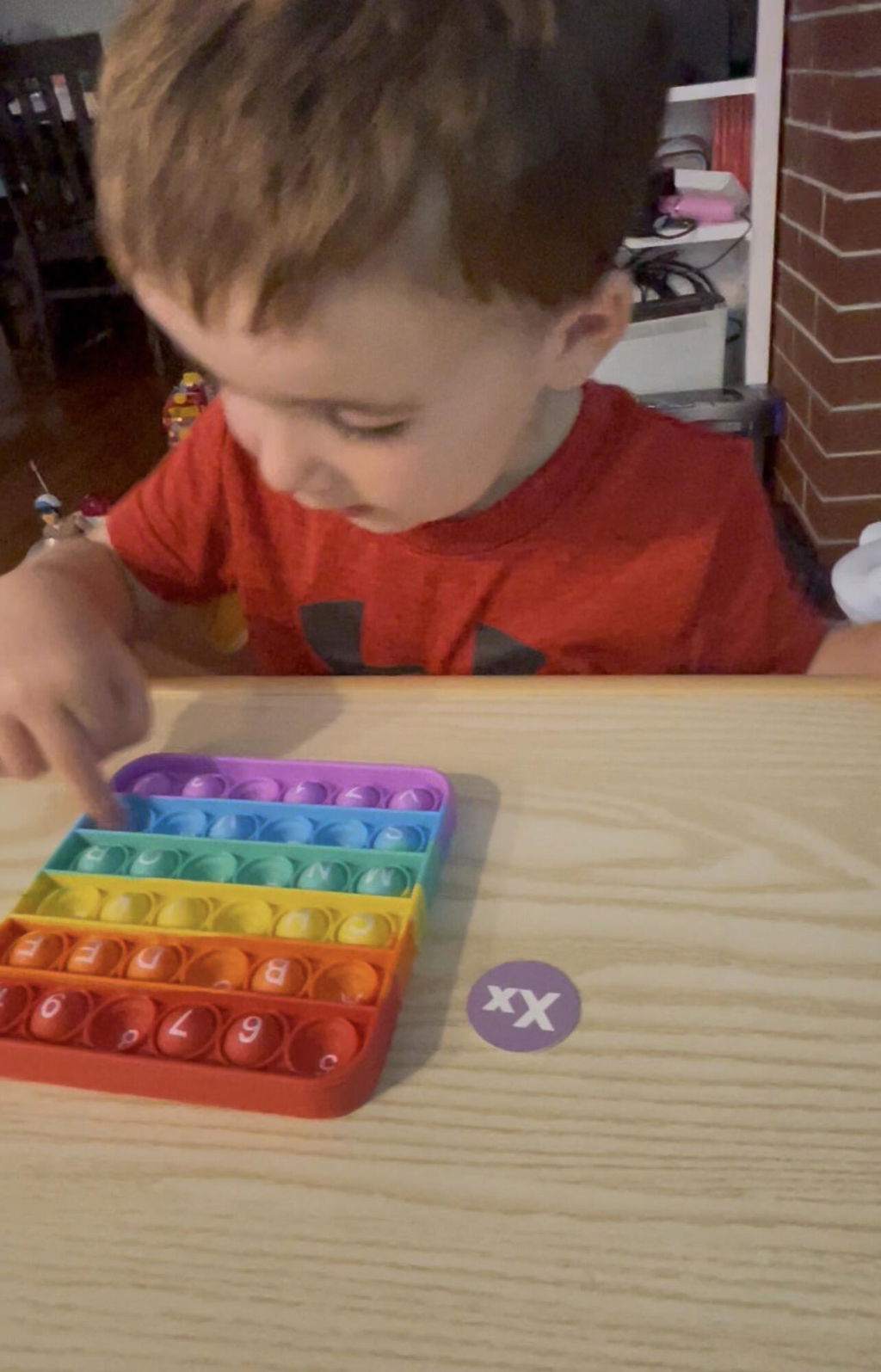
ABC BINGO!!
ABC BINGO!!
Regular price
£29.99
Sale price
£29.99
Regular price
£34.99
Unit price
per
What's Inside The Box
Skills Covered After 30 Days
- Identify all letters of the alphabet!
- Master all letter sounds!
- Identify colors and numbers
- Learn matching skills!
- Improve Motor Skills!
Key Features
- Ages 3+
- 2-6 Players (or 1-on-1 fun)
- Quick & Easy Play (10 min)
Educational Standards
Common Core
- CCSS.ELA-LITERACY.RF.K.1.D Recognize and name all upper- and lowercase letters of the alphabet.
- CCSS.ELA-LITERACY.RF.K.2 Demonstrate understanding of spoken words, syllables, and sounds (phonemes).
- CCSS.MATH.CONTENT.K.CC.A.1 Count to 100 by ones and by tens.
TEKS
- K.2B.i: identifying and matching the common sounds that letters represent;
- K.2D.v: identifying all uppercase and lowercase letters.
- K.2B: Read, write, and represent whole numbers from 0 to at least 20 with and without objects or pictures.
B.E.S.T
- ELA.K.F.1.1.f Identify all upper- and lowercase letters of the alphabet.
- ELA.K.F.1.3.a Demonstrate knowledge of the most frequent sound for each consonant.
- ELA.K.F.1.3.b Demonstrate knowledge of the short and long sounds for the five major vowels.
- MA.K.NSO.1 Develop an understanding for counting using objects in a set.
Ontario
- K- OE1.1 explore sounds, rhythms, and language structures, with guidance and on their own
- K- OE11.8 demonstrate knowledge of most letters of the alphabet in different contexts
- Grade 1- B2.2 name and form the upper- and lowercase letters both in and out of order and demonstrate knowledge of alphabetic order, with automaticity
BC
- K- Language features, structures, and conventions: concepts of print, letter knowledge
- Grade 1- Language features, structures, and conventions: concepts of print, print awareness
Alberta
- K- Children make connections between letters and sounds in words.
- K- Children recognize some letters and words with speed and accuracy.
- Grade 1- Students recognize and analyze letters and sounds in words.
Manitoba
- K: Recognize, apply, and adapt rules and conventions (e.g., form, genre, grammar, register, punctuation, elements of design, spelling, legibility).
New Brunswick
- K- Apply letter-sound knowledge to decode words and simple connected text.
- K- Demonstrate automatic recall of most letter sounds
- Newfoundland & Labrador
- K- GCO 4.5 demonstrate letter knowledge
Nova Scotia
- K- Learners will apply understanding of foundational language knowledge and skill when reading and writing.
- Grade 1- Learners will apply understanding of foundational language knowledge and skill when reading and writing.
Prince Edward Island
- K- 3.2 understand basic concepts of print including directionality, word, space, letter, and sound
Saskatchewan
- K- CCK.2 Use and construct symbols, pictures, and dramatizations to communicate feelings and ideas in a variety of ways.
Year 1
- Respond speedily with the correct sound to graphemes (letters or groups of letters) for all 40+ phonemes, including, where applicable, alternative sounds for graphemes
- Name the letters of the alphabet:
- Naming the letters of the alphabet in order
- Using letter names to distinguish between alternative spellings of the same sound
- Read and write numbers from 1 to 20 in numerals and words.
Our games are used in 50,000+ classroomsSpecial discounts for school districts and homeschoolers.
Get a Quote


Families Who Have Already Learned to Read
4.94
Skills Built
What skills does ABC BINGO!! build?
Letter Sounds
Matching letters to their sounds
Numbers
Counting and recognizing numbers
30-Day Money Back Guarantee
How to Play
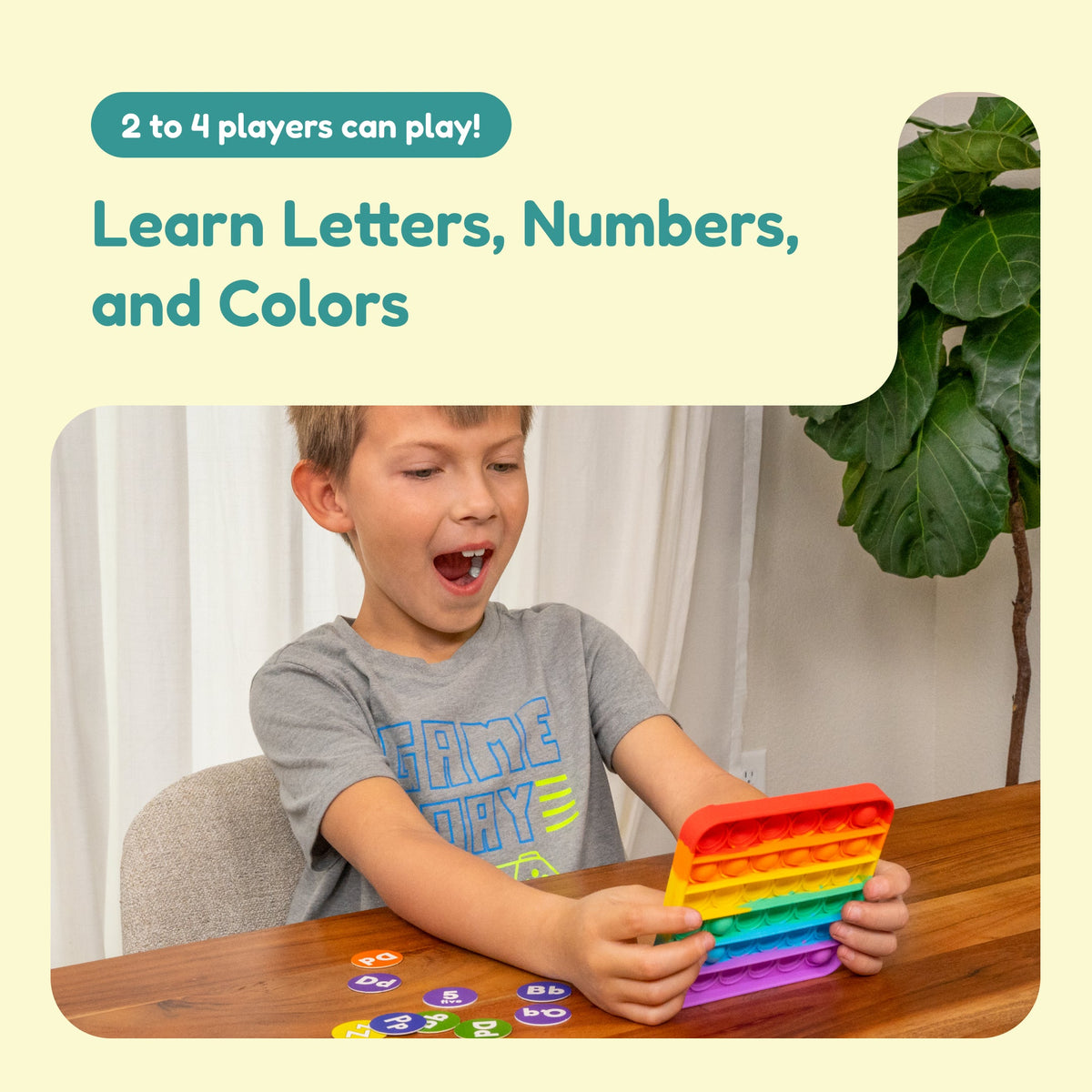
How to play ABC BINGO!!
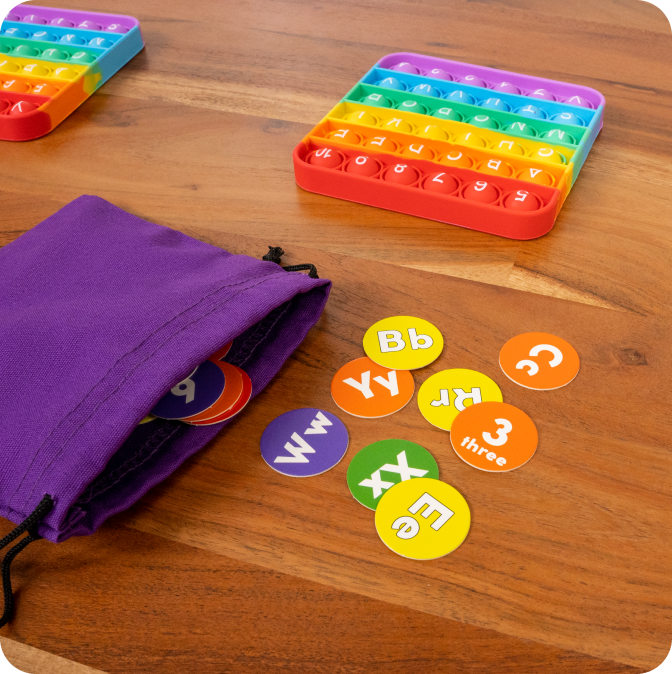
1
Get ready for fun!
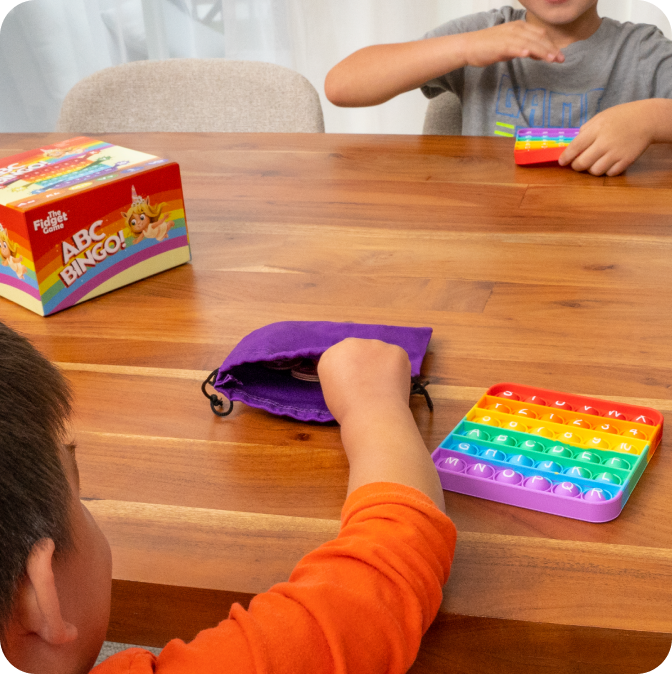
2
Take a token!
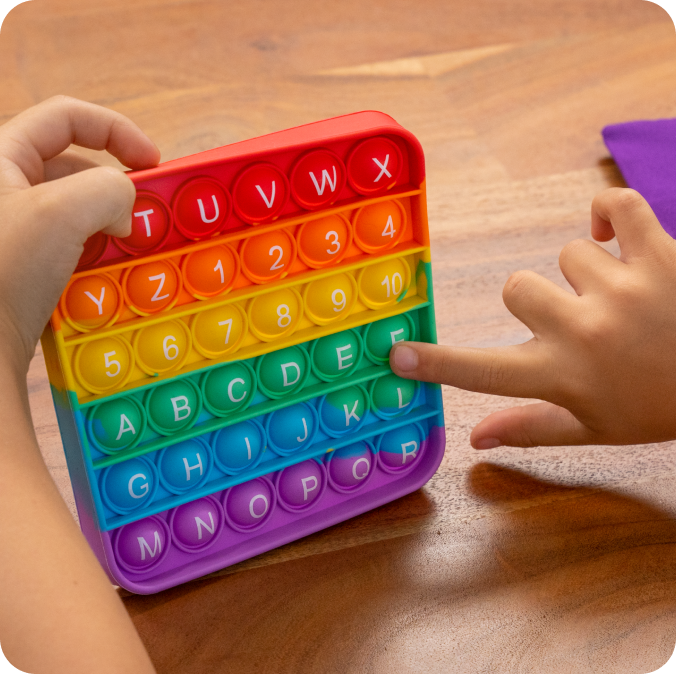
3
Pop if they match!
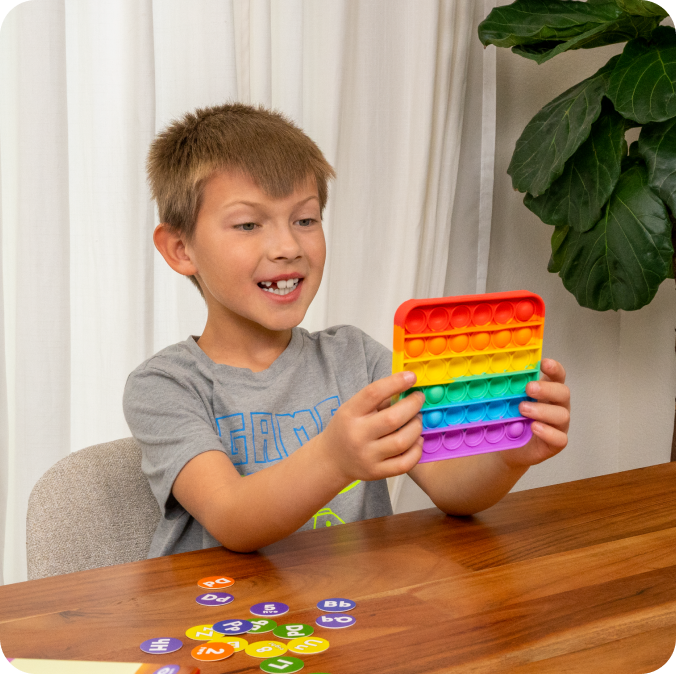
4
Call "bingo!" first & win!
Watch How ABC BINGO!! Works


* Results based on internal study with regular users. Individual results may vary.
You ask, we answer!
What is the return policy?
We offer a 30-day return policy for eligible items.